
Daniel Revenco
7min
03.09.2026
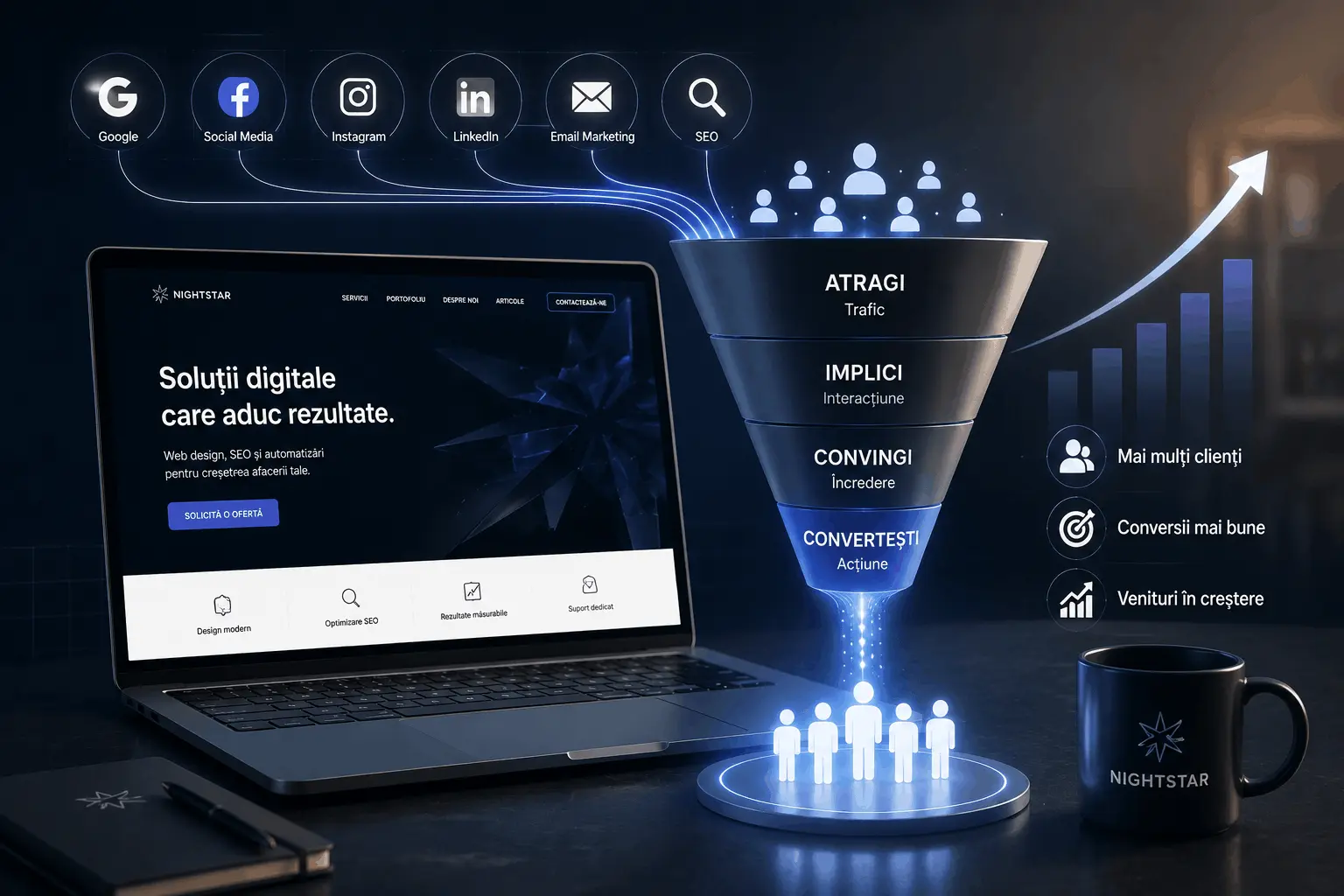
Many business owners believe their main problem is a lack of visitors. They pay for Facebook ads, invest in Google Ads and bring 2,000 or 5,000 people to their site every month—only to see very few form submissions, rare calls and disappointing sales.
The harsh truth of the digital environment is simple:traffic is just an opportunity, conversion is profit.
Sending people to a site that doesn’t know how to sell is like pouring water into a broken bucket. Below is the practical recipe: where to get qualified people and how to build your pages so that they take out their card or ask for an offer.
1. Where are you getting relevant traffic from? (Channels that matter)
Not every visit has the same value. The secret is not to gather tens of thousands of curious visitors, but to attract people who have an urgent problem that you can solve.
Here are the main traffic sources and their role:
Google Search (SEO - Organic Traffic):People actively looking for solutions (eg:“Chisinau commercial law lawyer”or“installation of solar panels price”). It is the most valuable long-term traffic because the intent to buy is at its highest.
Google Ads (Paid Intent Traffic):Immediate results for transactional keywords. You pay per click, but get directly in front of users ready to buy today.
Social Media Ads (Meta Ads, TikTok, LinkedIn):Traffic based on attention and interruption. The user is not actively looking for your product, but you pique their interest with a well-targeted visual offer based on interests or demographics.
Direct Traffic & Recommendations (Referral):Visitors coming from press articles, partnerships or referrals from other satisfied customers.
2. What is conversion rate and what does it depend on?
The conversion rate is the percentage of all visitors who take the desired action (submitting a form, placing an order, a direct call).
If out of 1,000 visitors you have 10 customers, your conversion rate is1%. If you optimize your site structure and get 30 customers from the same 1,000 visitors, you’ve tripled your earningswithout increasing the marketing budget.
3. Proven methods to increase website conversions
For a visitor to become a paying customer, their journey through the site must eliminate any technical or psychological hesitation.
A. Clarity of the message in the first 3 seconds (Above the Fold)
When a user opens your website from their phone or laptop, they need to instantly understand:
What exactly do you offer?
Who is the service or product suitable for?
What specific problem are you solving?
If the first section contains vague slogans like“Excellence and superior quality since 2018”, the user will go out and search for competition. Replace generalities with clear benefits.
B. Frictionless architecture (Frictionless UX)
Each additional step reduces the number of commands:
Short forms:Don’t ask for unnecessary data. For a service offer, you often only need Name, Phone Number and a short description.
Quick call to action:A floating WhatsApp button or direct mobile click-to-call often makes 60% of a local service site’s conversions.
Simplified Checkout:In e-commerce, it waives the obligation to create an account before completing the order.
C. Solid social proof (Social Proof)
People don’t buy if they have doubts. The elements that nullify the fear of spikes:
Real reviews taken from Google Reviews or messages received from customers.
Case studies with real pictures (Before vs. After).
Partner logos, certifications or explicit guarantees (eg: 14-day no-questions-asked return).
D. Technical reaction speed
Every second of page load delay decreases your conversion rate by up to 10-15%. People buy impulsively; if the page crashes on mobile, the boost disappears instantly.
Traffic brings people. Site structure brings money.
You can have the best product in the industry and the biggest advertising budget in your niche. If the site you’re sending people to is outdated, slow to load, or doesn’t make solid business sense, your advertising dollars are going straight down the drain.
An effective website is not built just “to look nice”, but as an automated sales machine, designed from the first line of code to the last pixel for a single purpose:Convert.